In my vision of the Western text, Aristotle’s work forms a turning point. Drawing from a series of philosophers and an oral tradition which wondered at the nature and value of existence and knowledge and survival, Aristotle moves to systematize the thinking that makes survival possible, and establishes the ordering principles of the physical plane, its constituent matter, and its forces for the purposes of enquiry. Aristotle declares which knowledge is valuable—he translates data into applicability and function, and creates a system of thought wherein one can produce more knowledge using replicability, comparison, and classification.
Systems of thought—so brilliant a purpose, a whole domain of forces and elements, potential causes and effects; and choosing to utilize, like tools, words and phrases, people, poetic devices, based on predictable results and with intent.
Aristotle’s vision for the order of the physical world relies on a supposition of an objective rubric. Therein lies the domain of all possible variable characteristics of any thing. It’s the source of value, in a mathematical manner of speaking, independent of sensed experience. All things comprise a series of characteristics—the set of which makes their defining form. The world can be known by filling in the blanks.
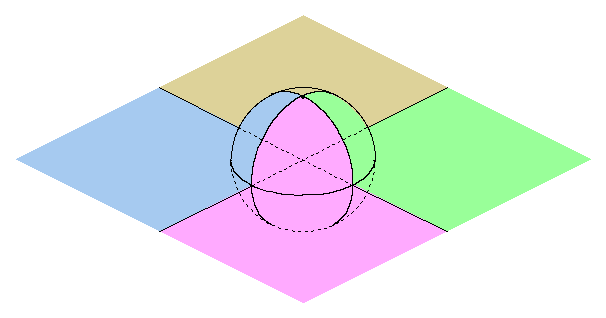
The logical order exists in this plane, and a sense of the mystical is absent in Aristotle. All things go toward their form, but perfection exists in a physical sense, and can be grasped by reason. It’s all very brass tacks. Thinkers like Plato and Parmenides, in contrast, utilized a philosophical system in a different sphere, influential of the physical but irreplicable here, and almost irreconcilable with data about the physical world perceived by the senses. Aristotle solves that problem.
To live in a city and utilize reason is to be human—in a city, one does more than just survive; sustenance ta
 ken care of, he engages and is political, and he uses all those parts of his thinking capacity to fully live as human, as is his form. Like all things in the physical world, human individuals are valued by external standards. They have a place, a function in society, based on their value and contribution to it. For this they are naturally suited. One works toward her or his full capacity, and that is moral. Each is more or less able to understand the order, utilize reason, and be more or less fully human. Thus we have a rationale for slavery and Greek domination. Enter stigma, racism, and social stratification with the veneer of objective value and thus normalcy and legitimacy.
Too bad for this turning point—the definition of knowledge set, enquiry filled in blanks and sophistic wondering and introspection about the knowable slowed. No more creativity in philosophy? Cold science ever after? And deductive logic needs assumptions—classification simplifies and limits, and requires an initial inductive leap—perception begins it whether you wish it or not. To deny this step, the first, denies sources. And again, enter legitimacy.
Aristotle’s is a knowledge of control. The father of control, like Herodotus was the father of history. His is a knowledge of predictability, application, function. It’s the opportunity for technology, and comparative study. It separates man from his sensed world by his capacity for reason—and he dominates his space and others. The system of knowledge facilitates, encourages control It’s the goal, and the endpoint.
Right now I had to write it like this. I embrace my limits as opportunities for growth.










2 comments:
Adam,
Interesting post. Much different from your past ones, I think, but I like the direction you are headed.
Two comments/questions:
1. You wrote: "Like all things in the physical world, human individuals are valued by external standards." External standards? What does that mean? Simply objectivity? And how would you explain it in terms of Aristotle's discussion of intellect in De Anima?
2. Social stratification, yes, but stigma and racism (and normalcy)? I am very skeptical. Doesn't defining stigma and racism in these terms only obscure the roles they play and the structures they operate through in our own society?
It was different. I did three drafts and ton of notes in the other style, and it just didn't come out. I got his philosophical system (or maybe not?), but for some reason just couldn't write in my usual style on it.
1) The intellect is the part of human thought that grasps the externally based, objective rubric from which human individuals get value. It is a capacity, not a source.
2) Normalcy in the sense of an established standard. And I find it weird that you distinguish between stigma/racism and social stratification. I don't think it obscures the roles at all...given that stigma and racism are constructs just like (as I believe) social stratification is. Otherness depends on value, and vice versa--the two are linked. This is best seen (but not exclusively present) in more scientific angles to these questions, see: physical anthropology, pyschiatry, etc.
Post a Comment